The short lengths of string between the nut and tuning posts can produce a high, metallic sound when plucked. This is a special effect whose pitch and loudness depend on the guitar. It is different from acoustic feedback, which involves a loop between the instrument and amplified sound.
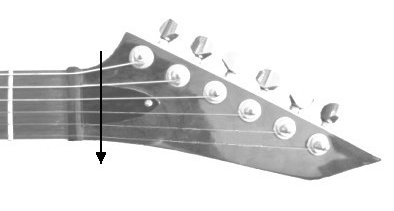
Try a light touch
Identify the nut and tuning machines first. If there is enough accessible string to pluck without catching the hardware, brush or pluck it lightly. Keep your hand clear of sharp string ends. There is no need to strike hard or pull the string away from the headstock.
Listen acoustically before trying amplification at a comfortable level. The sound may be faint or may not come through the pickup clearly. More gain can make unwanted noise louder too; it does not guarantee a useful result. Hub Guitar’s behind-the-nut lesson also recommends a light brush and notes the amplification limitation.
Hardware changes the result
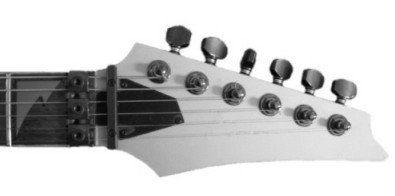
A locking nut changes how the strings are coupled across the nut. The short lengths behind it can still vibrate, but you should not expect the same amplified effect as on another guitar. Do not loosen a lock or alter hardware to make this experiment work. Headless designs and covered or very short string lengths may offer no practical plucking area.
Plucking these lengths is also different from pressing behind the nut to bend a normally played note. For a first pitch-control exercise, use the fretted-note bending lesson.