In this lesson
To transpose guitar chords, move every chord root by the same number of semitones in the same direction, keeping its chord type. Move a separately named slash bass by that amount too. For example, taking B♭, Gm, E♭, F down three semitones gives G, Em, C, D. The minor chord stays minor.
This lesson works out that complete change of key, then checks the new chords with familiar open shapes. The chart is an original example, not a song transcription. Use standard tuning, E A D G B E from string 6 to string 1, with no capo for the playing check.
Choose a target and count the pitch change
The original example is in B♭ major, pronounced B-flat major. The target is G major. Start on B♭ and count each downward move:
B♭ → A → A♭ → G: three semitones down.
B♭ is the starting point, numbered zero. Moving to A is one, A♭ is two and G is three. Counting the starting note as the first move would give the wrong distance.
Use the chromatic sequence when the names are unfamiliar:
C, C♯/D♭, D, D♯/E♭, E, F, F♯/G♭, G, G♯/A♭, A, A♯/B♭, B, next C
Each neighbouring position is one semitone. B to C and E to F are each one move, with no extra pitch between them. The paired names share a pitch on an ordinary equal-tempered guitar. Choose the spelling that fits the new key or chord; G major uses F♯, not G♭. See semitones and accidentals for the note-name rules.
Choose a new key with everyone who will play or sing. Open shapes may be easier in one key, but that does not establish a comfortable singing range. Check the actual melody, including its highest and lowest notes. The first chord alone does not always identify a song’s key; this practice chart’s key is given.
Apply the same move to every chord
Keep the chord’s major or minor quality while changing its root:
| Original chord | Root moving down three semitones | New chord |
|---|---|---|
| B♭ major | B♭, A, A♭, G | G major |
| G minor, Gm | G, G♭, F, E | E minor, Em |
| E♭ major | E♭, D, D♭, C | C major |
| F major | F, E, E♭, D | D major |
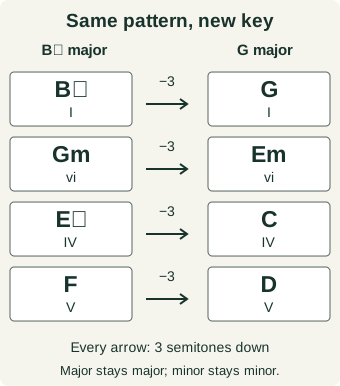
The progression is I, vi, IV, V in both keys. Uppercase I, IV and V represent major triads; lowercase vi represents a minor triad. The chords-in-a-major-key lesson shows how to derive the complete chord family. Numbers let you describe the same harmonic pattern in different keys.
You can check the result using the notes inside each triad:
| Original chord notes | Each note down three semitones | Result |
|---|---|---|
| B♭, D, F | G, B, D | G major |
| G, B♭, D | E, G, B | E minor |
| E♭, G, B♭ | C, E, G | C major |
| F, A, C | D, F♯, A | D major |
This is a pitch-name check. Octave numbers and individual guitar voices are not specified in these note sets.
Form the new G, Em, C and D shapes
If you already know these shapes, pick their intended strings separately and check each grip without a beat. Read the patterns from low E to high E: x means leave out; 0 means open. The first-chord lesson supplies full finger instructions and diagrams.
The dot numbers are fretting fingers: index 1, middle 2, ring 3 and little 4.
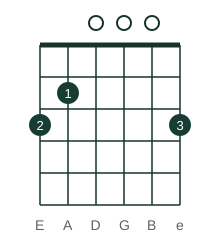
3 2 0 0 0 3.For G, use middle on low-E fret 3, index on A fret 2 and ring on high-E fret 3.
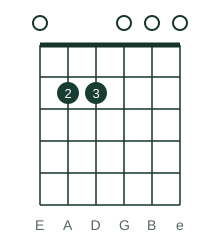
0 2 2 0 0 0.For Em, use middle on A fret 2 and ring on D fret 2.
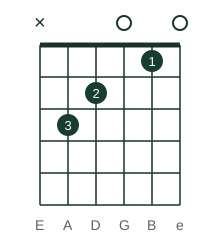
x 3 2 0 1 0.For C, use ring on A fret 3, middle on D fret 2 and index on B fret 1.
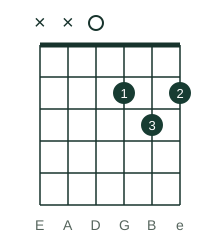
x x 0 2 3 2.For D, use index on G fret 2, ring on B fret 3 and middle on high-E fret 2.
Leave each other intended string open, as shown below.
| Chord | Pattern, strings 6 to 1 | Strings to play | Sounding pitches, low to high |
|---|---|---|---|
| G | 3 2 0 0 0 3 |
All six | G2, B2, D3, G3, B3, G4 |
| Em | 0 2 2 0 0 0 |
All six | E2, B2, E3, G3, B3, E4 |
| C | x 3 2 0 1 0 |
A through high E | C3, E3, G3, C4, E4 |
| D | x x 0 2 3 2 |
D through high E | D3, A3, D4, F♯4 |
Check G, then Em, C and D in that order. Stop the ringing strings between checks and take as much time as each change needs. After checking D, gently touch the strings to stop them. To repeat, form G again and begin the same untimed check. There is no beat, strumming pattern or playback to match here. Use the chord-change drill if forming the next shape interrupts your check; release between attempts and stop if playing hurts.
These open grips realise the new chord symbols. They do not move every note of an earlier B♭ guitar grip down exactly three semitones: the number of strings, doubled notes and octaves can change. That is a choice of voicing, or how the chord’s notes are arranged. To transpose a written melody or a particular guitar part exactly, move its individual notes by the required interval and preserve its written rhythm, rather than replacing it with these chord shapes.
Keep sevenths and other suffixes
The symbol after a root describes the chord type. Preserve it when moving the root. With the same three-semitone downward move:
- B♭maj7 becomes Gmaj7, keeping the major seventh.
- Gm7 becomes Em7, keeping the minor triad and minor seventh.
- Fsus4 becomes Dsus4, keeping the suspended fourth.
- D7 becomes B7, keeping the dominant-seventh type.
The last example shows why looking up only the ordinary chords of the target key is insufficient. D7 is outside the B♭-major diatonic chord family, and its transposed B7 is outside G major’s family. It still moves by the same interval. Replacing B7 with Bm or another in-key chord would change the harmony.
The notes confirm it: D7 is D, F♯, A, C. Move each down three semitones to get B, D♯, F♯, A, which is B7. The seventh-chord guide distinguishes 7, maj7 and m7; sus2 and sus4 chords explains those suffixes.
Move both names in a slash chord
In B♭/D, B♭ names the chord and D names its lowest sounding note. Apply the same downward move to both:
B♭ becomes G; D becomes B; B♭/D becomes G/B.
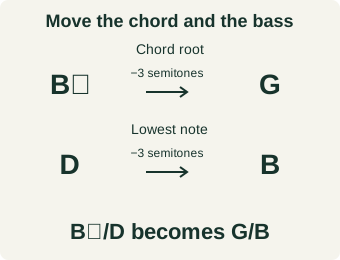
B♭/D has the major third D in the bass; G/B keeps the major third B in the bass. This is a chord-symbol task, with no prescribed fretboard voicing. The slash-chord lesson explains how to check a specified bass against an actual guitar shape.
Separate the new key from capo shapes
Playing G, Em, C and D without a capo puts this example in G major. It will not match a recording or another player who stays in B♭ major.
If you want these same relative shapes to sound the original B♭, Gm, E♭ and F chords, a full capo at fret 3 raises them three semitones. Check all four: G becomes B♭, Em becomes Gm, C becomes E♭ and D becomes F. You have changed the shapes while retaining the original sounding key. Follow the capo lesson for fitting, relative fret numbers and tuning checks.
At the level of root names, moving down three semitones reaches the same target chord roots as moving up nine. Those are different register choices for a melody or individual note, an octave apart. A chord chart by itself does not decide which register suits a singer or a guitar arrangement.
Check your transposition
- Why is B♭ to G three downward semitone moves rather than four?
- What does Gm become when moved down three semitones?
- What happens to B♭maj7 and D7 with that same move?
- Why does B♭/D become G/B rather than G/D?
- Does changing to the open G-key grips preserve every original note’s octave?
- How can those G, Em, C and D shapes sound the original B♭-key chords?
Check your answers
- B♭ is the starting point, zero. A, A♭ and G are moves one, two and three.
- Em. The root moves from G to E and the chord stays minor.
- Gmaj7 and B7. Keep each suffix while moving its root.
- Move the bass D down three semitones to B, along with the root B♭ to G.
- No. Open shapes can rearrange octaves, doubled notes and the number of sounding strings. Exact note-by-note transposition needs a particular part.
- Use a full capo at fret 3 and move the familiar shapes relative to it: they sound B♭, Gm, E♭ and F.
Before playing with others, write the original and new chord symbols on separate lines, check every root, suffix and slash bass, then agree which sounding key everyone will use. Keep each chord’s place and duration in the chart. Once the names are correct, choose comfortable voicings for the actual arrangement.
Source notes
Jerry Kovarsky’s Yamaha article How to transpose describes fixed-interval and Roman-numeral methods for keyboard players. Catherine Schmidt-Jones’s Transposition: changing keys, particularly “Transposing Chord Names”, explains retaining chord types and moving a named bass with the root. The B♭-to-G chart, guitar pitch checks, diagrams and questions were prepared for this lesson. No source recording, song or performance is reproduced.